
Two beakers of water can look like twins and be nothing alike. One could be perfectly fine. The other could corrode a pump, stress a river, or fail a compliance limit.
You wouldn't know by looking, which is exactly why water quality testing matters. Here's what the five most commonly measured parameters actually tell you, what they're measured in, and why each one is worth knowing.

The five parameters at a glance
| Parameter | What it measures | Measured in | Visible by eye? |
|---|---|---|---|
| pH | Acidity or alkalinity | pH units (0–14) | No |
| EC | Electrical conductivity - dissolved salts and minerals | µS/cm or mS/cm | No |
| DO | Dissolved oxygen | mg/L or % saturation | No |
| ORP | Oxidation-reduction potential | mV | No |
| NTU | Turbidity - suspended particles | NTU | Sometimes |
Only one of these five gives anything away visually. Turbidity you can sometimes judge by eye. The other four look like nothing at all until you measure them.
pH - acidity and alkalinity
pH measures how acidic or alkaline water is, on a scale from 0 to 14. Below 7 is acidic, above 7 is alkaline, and 7 is neutral.

The scale is logarithmic, so each whole number is a tenfold change. Water at pH 6 is ten times more acidic than water at pH 7, not slightly more.
Why it matters: even small pH shifts can harm aquatic life, corrode pipes and equipment, or throw off chemical dosing.
EC - electrical conductivity
EC measures how well water conducts electricity, which depends on the amount of dissolved salts and minerals in it. Pure water is a poor conductor - the more dissolved ions, the higher the reading.

Why it matters: it's a fast way to track salinity and pollution, and to check whether water is suitable for irrigation or process use. A sudden change in EC is often the first sign that something has entered a water body that shouldn't be there.
EC readings change with temperature, so they're normally compensated to 25 °C to make them comparable. Most meters handle this automatically.
DO - dissolved oxygen
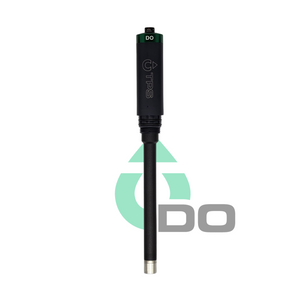
DO measures how much oxygen is dissolved in water - the same oxygen aquatic life breathes. It's reported either as a concentration (mg/L) or as a percentage of what the water could hold at that temperature and pressure (% saturation).

Why it matters: low DO stresses or kills fish and other organisms, and often signals pollution or poor circulation.
DO is also the most time-sensitive parameter on this list. Oxygen levels swing through the day as aquatic plants photosynthesise and respire, so when you sample matters as much as where.
ORP - oxidation-reduction potential
ORP measures water's tendency to oxidise or reduce other substances. In plain terms: how strongly it can clean or break things down. It's reported in millivolts, and can be positive or negative.

Why it matters: it's a quick check on disinfection strength in treated water, and on corrosion risk in industrial systems.
ORP is a measure of oxidising strength rather than of any particular chemical, so it tells you how effectively water can disinfect without telling you what's doing the disinfecting.
NTU - turbidity
NTU measures turbidity, or how cloudy water is, caused by suspended particles like silt, algae or sediment. The unit stands for Nephelometric Turbidity Units, which describes the method: shining light through a sample and measuring how much of it scatters.

Why it matters: cloudy water can mean poor filtration, sediment runoff, or unsafe drinking water. Suspended particles also shelter microorganisms from disinfection, so high turbidity undermines treatment that would otherwise work.
This is the one parameter here you can sometimes judge by eye - but only roughly, and only at the higher end. Water that looks perfectly clear can still carry enough suspended material to matter.
Why measuring all five matters
Each parameter answers a different question, and any one of them on its own can be misleading. Low DO tells you there's a problem; EC and turbidity often tell you where it came from.
- They catch problems you can't see. Four of the five give away nothing visually.
- They confirm treatment and filtration are working rather than assuming they are.
- They protect rivers, lakes and groundwater by catching changes early enough to act on.
- They support water that's fit for its purpose. Irrigation, process use, drinking water and aquaculture all have different requirements.
The parameters also interact. Temperature affects both DO saturation and EC readings. Turbidity can interfere with optical measurements. Reading them together gives you a picture that no single parameter can.
Common questions
Can one meter measure all five parameters?
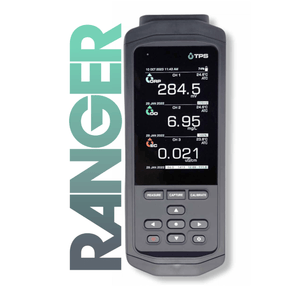
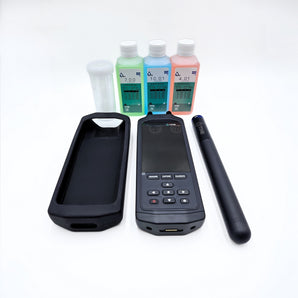
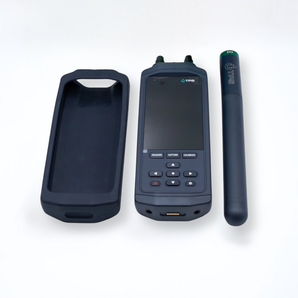
Multiparameter meters measure several at once, though the combination depends on the instrument and which sensors are fitted. How many you can run simultaneously varies by model. The 5-Port Ranger Handheld can measure pH, EC, ORP, and DO simultaneously - with a new NTU sensor option on the horizon.
Which parameter should I measure first?
It depends what you're trying to find out. For general water health, pH and DO are the usual starting point. For salinity or contamination, EC. For drinking water and filtration performance, turbidity.
Is TDS the same as EC?
Not quite. Total dissolved solids is calculated from an EC reading using a conversion factor, so it's derived from conductivity rather than measured directly. The right factor depends on what's dissolved in the water, which makes TDS an estimate.
Need help working out how to measure these parameters?
Tell us what you're measuring and where, and our team will point you to the right instrument.
If you already own a TPS instrument and are thinking of expanding to measuring more parameters, give us a call for expert advice.
1300 HEY TPS
sales@tps.com.au
Read more articles
Browse our latest news and articles below.
What are pH, EC, DO, ORP, and NTU? Key Water Quality Parameters Explained
Two beakers of water can look like twins and be nothing alike. pH, EC, DO, ORP and NTU are the...
Why is my pH Sensor Cloudy? What it Means and How to Fix it
Cloudy pH sensor? It's usually crystallised electrolyte or fouling on the glass - and neither one means with certainty that...
How do I Calibrate my Ranger pH Sensor?
Need a hand figuring out how to calibrate your Ranger pH sensor? Good news - it's a simple and quick...
Get All The Updates
Join thousands of other likeminded people, who receive monthly updates on all things TPS, water quality, deals, giveaways, and more!